

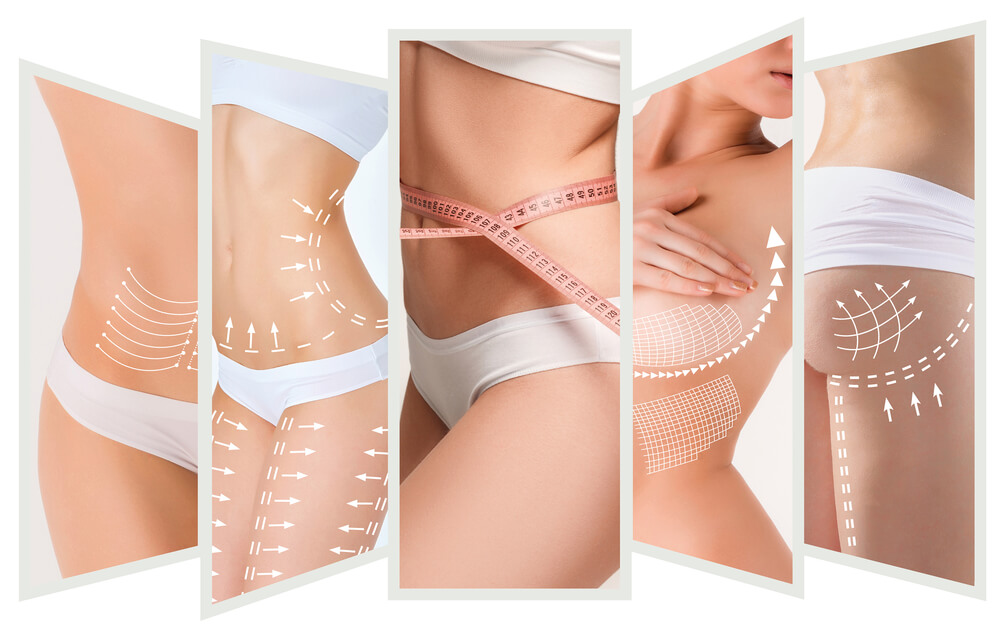
Post-bariatric surgery, once a significant amount of weight is lost, excess skin and folds leftover from the period before weight loss can often be very difficult to eliminate through traditional means, and can make you dissatisfied with your appearance. Regular exercise and toning massages are required which will largely avoid skin sagging. We recommend, the cosmetologist help with toning creams and medical skin and face lift through injections which will largely avoid having a surgical intervention necessary.
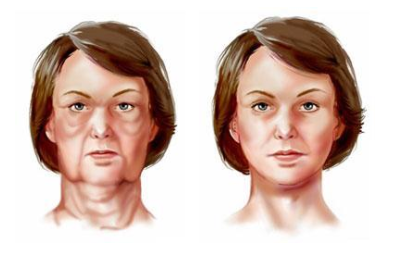
After dramatic weight loss, the face skin may become flaccid, resulting in the cheek pads dropping, and jowls forming, resulting in the loss of a defined jaw line. In addition, the neck will become loose and sagging, especially after the age of 40. We recommend regular facility exercise and massages from one month after surgery. Cosmetologist will help in the initial stages with toning creams and medical face lift through injections. Very rarely you will need surgical face lift to raise the cheek pads, corrects the jowls, and removes the loose sagging skin. The incisions are inconspicuous. They are placed in front of and behind the ears extending into the hair above and behind the ear. Whether medical or surgical, the facelift gives you a very young look which will go well with your drastic weight loss.
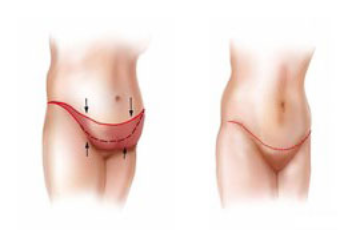
Abdominoplasty ( panniculectomy) is performed to remove the hanging abdomen (pannus), or apron of skin, from the lower abdomen below the belly button. The excess skin and fat above the belly button are not removed. However, the excess fat will be removed by making a tunnel under the skin or by liposuction. A panniculectomy is often performed on patients who are still significantly overweight but have skin irritation from their hanging skin. After surgery, these patients have less skin problems but have little improvement in the contour of their bellies. This procedure can be combined with bariatric surgery for patients with a huge apron which is causing issues to patient’s quality of life.
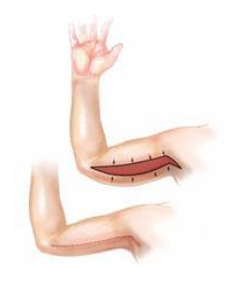
An arm lift, or otherwise known as brachioplasty, can remove the excess skin and fat deposits, leaving the upper arms with a more pleasing and youthful contour. As a person ages, upper arm skin can become loose and flabby. Plastic surgeons will consult with patients about undergoing surgery for an arm lift if they wish to tighten this skin to look and feel more youthful. In some instances, your plastic surgeon may recommend that liposuction be used alone or in conjunction with an arm lift to remove excess fat in the upper arms.
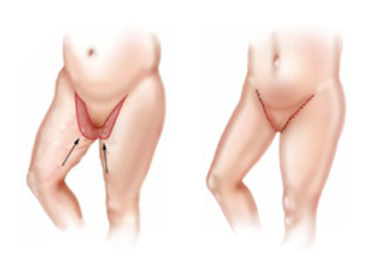
The medial thigh lift will lift and tighten the sagging skin of the inner thigh. The medial thigh skin sagging is uncommon except in patients with huge thighs. It will be very uncomfortable moving around if the patient has a sagging medial thigh as the friction between the sagged skin causes discomfort. Incisions are usually placed obliquely in the groin. The flap is incised and is elevated in the plane above the superficial fascia. There is no undermining beyond the edges of the incision. After fixation of the thigh’s deep fascia, suturing is performed in 3 planes.